Warrior Biker Church | Leadership
Ministry training is how the Lord shapes a servant for the work He has appointed them to, and it is far more than classes and coursework. Formal courses build knowledge; the Lord builds the person. Scripture shows His pattern plainly: wilderness seasons, small hidden assignments, character work, failure, and long waiting are the training itself, not a delay before it. This article is for anyone who senses a call to ministry and feels unready, whether you are a Bible college student, a volunteer serving in your local church, or a rider who keeps getting handed responsibility you never asked for. It matters because most people quit during the very seasons that were preparing them.
People assume that getting ready for ministry happens mainly in a classroom, that you take the courses, you graduate, and then you are prepared. The Bible tells a very different story. The real training ground for the Lord’s servants is usually life itself, and more often than not it is the hard, hidden, frustrating seasons that do the deepest shaping. Here is how He actually trains people for ministry, and why the waiting and the wilderness are not delays but the training itself.
The Wilderness Comes First

Look at the pattern and it is almost impossible to miss. Moses spent forty years in the desert tending sheep before the Lord sent him to deliver a nation. David was anointed king as a teenager and then spent years running for his life in caves before he ever wore the crown. Even Jesus Christ spent thirty quiet years before three years of public ministry, and the Holy Spirit led Him straight into the wilderness to be tested before His work began.
Then Jesus was led up by the Spirit into the wilderness to be tempted by the devil. Matthew 4:1 (NKJV)
Notice it was the Spirit who led Him there. The wilderness was not an accident or an attack that slipped past heaven’s notice. It was part of the plan. The Lord consistently takes His servants through a wilderness season before He uses them, because the desert does something no classroom and no certificate ever can. It strips away self-reliance, exposes what is really in the heart, and challenges you to depend on God alone while the world is telling you to build your own platform. If you are in a wilderness right now, wondering why nothing is happening and why you seem to be sitting on a shelf, you may be in the most important season of your ministry training, not a detour from it.
Faithfulness in Small Things
Before the Lord hands a servant big responsibility, He almost always tests them with small responsibility first. It is one of His most consistent principles, and no ministry training program can substitute for it.
He who is faithful in what is least is faithful also in much. Luke 16:10 (NKJV)
David was faithful guarding a few sheep in obscurity long before he led a nation, and he even killed a lion and a bear in defense of those sheep with no audience watching. That hidden faithfulness was the training that prepared him for Goliath and beyond. If you want to be trusted with much in ministry, the question is not whether you feel ready for the big thing. It is whether you are faithful with the small thing in front of you right now, the unglamorous serving, the task no one sees, the responsibility no one would applaud. The Lord watches how you handle the little before He entrusts you with the large, and most leaders disqualify themselves not in the spotlight but in the small, unseen assignments they decide are beneath them.
Character Before Gifting
The Lord is far more concerned with who you are than with what you can do. The world is full of gifted Christians who crashed and burned because their character never caught up to their talent, and the wreckage they left behind was enormous. God refuses to build that way. He develops character first, often slowly and often painfully, because a gift without character is a danger to everyone around it. Talent can open a door, but only character can keep you standing once you walk through it. Much of your ministry training is simply the Lord working on your character in the hidden years, dealing with your pride, your fear, your impatience, your hidden sin, long before He ever puts you in front of people. Do not resent that work. It is the very thing that will keep you from falling later.
Learning Through Failure
Some of the most important training the Lord does in a servant comes through their failures. Peter denied Jesus three times, and that humiliating, public collapse was part of what shaped him into the rock who later led the church. Moses tried to deliver Israel his own way, killed a man, and fled into forty years of exile before he could be used the right way. Failure is not the end of your training; in the Lord’s hands it is often the heart of it. He uses our worst stumbles to burn out our self-confidence and teach us to lean on Him. If you have failed, even badly, that does not disqualify you from ministry. A humbled, restored failure is frequently more useful than someone who has never been broken, because he has learned the one lesson every servant must learn: it was never about his own strength.
The Call and the Equipping
Here is a promise that has carried countless reluctant servants forward: God does not call the equipped, He equips the called. Almost no one He used in Scripture felt ready. Moses argued that he could not speak. Jeremiah said he was too young. Gideon considered himself the least in his family. Isaiah cried out that he was a man of unclean lips. Not one of them was qualified by their own measure, and the Lord used every one of them anyway, supplying what they lacked as they stepped out in obedience.
Now may the God of peace … make you complete in every good work to do His will. Hebrews 13:20-21 (NKJV)
He Himself makes you complete for the work He has called you to. Your job is not to feel ready before you obey. Your job is to say yes and trust Him to equip you in the doing. The equipping very often comes in the middle of the obedience, not before it, which means the feeling of unreadiness is not a reason to wait. It is the normal starting point for every leader He has ever used.
Where Classes and Courses Fit in Ministry Training
None of this means formal training is worthless. Classes matter. Sound biblical education matters enormously, and every generation of the church has needed leaders who could handle the Word of God accurately rather than confidently repeat what they heard secondhand. If you are seeking preparation for ministry, good courses are a gift. A local Bible school, a seminary, a ministry training institute, or a solid certificate program will teach you how to study the Word in context, how to recognize error, and how to teach with clarity.
That kind of coursework covers ground you will not stumble into on your own. Students learn biblical languages, church history, theology, disciple making, evangelism, worship, and pastoral care. Good programs also push students out to practice what they are learning while instructors are still close enough to correct them. Many programs now let you work through online courses at your own pace, which means a working man with a family can pursue real training without quitting his job, and some of the best of it is free. Ministry students who take those programs seriously come out sharper than they went in. Students in a good school are not customers; they are believers in training, and the best instructors know it. Students who stay humble learn the most. Instructors who have actually served in ministry for decades can spare you years of avoidable mistakes, and the best instructors do not simply lecture; they engage their students with hard questions, challenge lazy thinking, and pray with them, and a recognized degree or certificate opens doors in settings that require one. If you are interested in that path, explore it seriously and do the work with quality.
But hold the whole thing in proportion. Paul was trained under Gamaliel, about the finest formal education available in his world, and the Lord used every bit of it. Peter and John had no classes and no certificates at all, and the religious officials who examined them marveled that unschooled fishermen carried such authority, taking note that these men had been with Jesus. Both kinds of servants were used. What the two groups shared was not coursework; it was Christ.
Now when they saw the boldness of Peter and John, and perceived that they were uneducated and untrained men, they marveled. And they realized that they had been with Jesus. Acts 4:13 (NKJV)
So take the classes, finish the courses, earn the degree if that door opens. Just do not confuse a diploma with readiness. Knowledge fills the head, and the church badly needs leaders who know the Bible, but knowledge without character produces a well-informed danger. Certificates cannot give you humility, and no instructor can hand you dependence on the Holy Spirit. Formal ministry training gives you tools; the Lord Himself develops the believer who will carry them. That is true for Christians in every corner of the world.
The Local Church Is the Main Training Ground
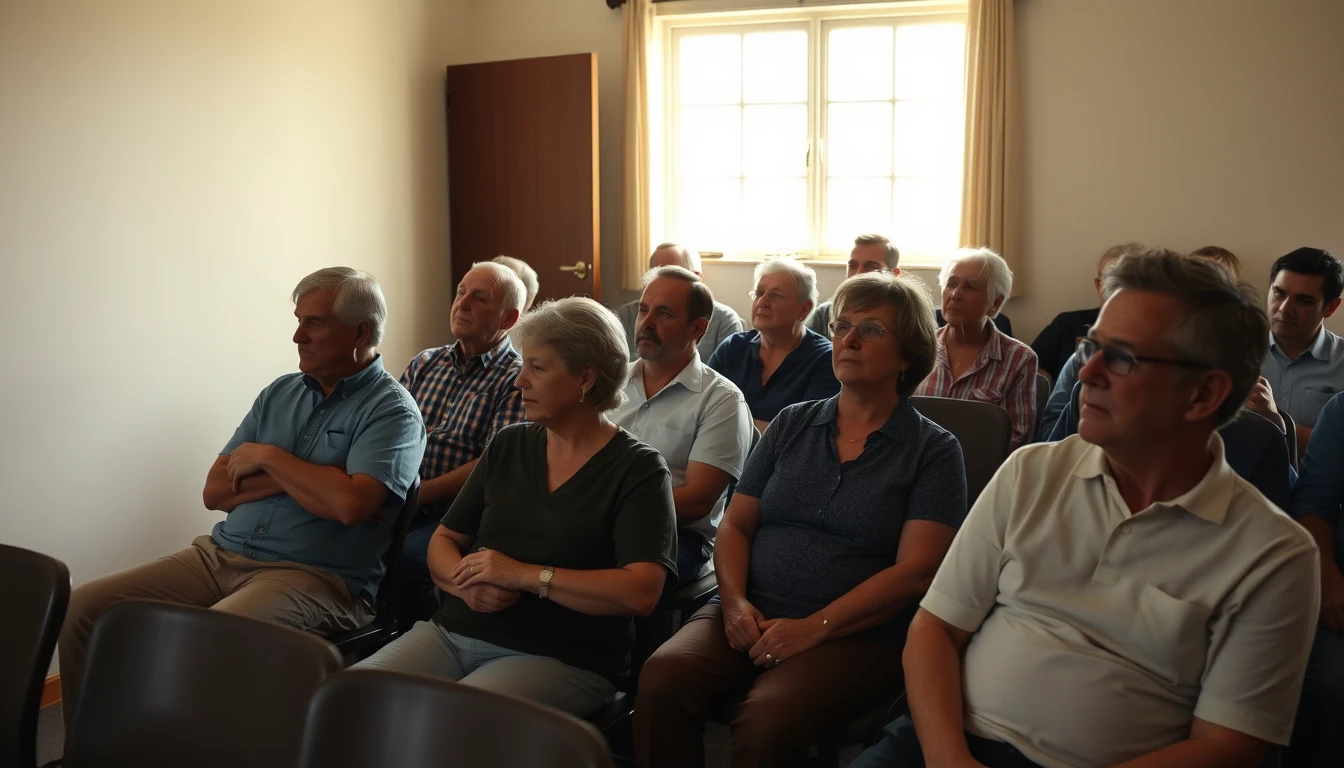
If the classroom is one piece of ministry training, your church family is the main one. Discipleship was never designed to be a correspondence course. Jesus trained twelve men by living with them, letting them watch Him work, sending them out, debriefing their failures, and doing it again. That is disciple making, and it still happens in the same way: shoulder to shoulder, in community, over time.
So plant yourself in a church and serve. Set up chairs, run the sound, teach the kids, help on the worship team, visit the sick, join the outreach nobody volunteers for. Engage the people right in front of you. Practice ministry in the small settings where the stakes are low and the lessons are cheap. Learn to pray with hurting people, to share the gospel plainly with a stranger, and to help lead a room in worship. Ask an older believer to give you honest guidance, and take the correction when it comes. Paul poured himself into Timothy, and Barnabas took a risk on Saul when the church was still afraid of him, giving him the support and the encouragement he needed to grow into the leader he became. Every leader worth following was mentored by somebody. Christians grow in community, where honest support and correction come from people who actually know you. Every church community has neighbors who still need the gospel, and learning to reach them where you live is training for a world far wider than your own street. And the gospel was never meant to stay in the building; it is meant to go into all the world, which is why ministry training exists to put prepared servants into that mission field.
And the things that you have heard from me among many witnesses, commit these to faithful men who will be able to teach others also. 2 Timothy 2:2 (NKJV)
That verse is the whole model of ministry training in one sentence: learn it, live it, hand it off. Christians grow by being taught and then teaching someone else. Serving alongside that body also does something no program can measure. It exposes you to real people with real problems, it challenges your patience, and it teaches you to work with a community rather than perform for an audience. That is where you learn whether you actually love people or just love being needed. You do not need a title to minister to somebody, and the ones who minister best are usually the ones who have prayed the longest for the people in front of them. Leaders come out of that environment tested, empowered by the Spirit, and ready for a mission far bigger than their own development.
Don’t Despise the Process
The biggest temptation in ministry training is to rush it, to grab for the platform before the preparation is finished, to resent the slow seasons and the hidden work. But the Lord is never in a hurry, and the preparation is never wasted. The years David spent in caves became the raw material of the psalms that have comforted suffering people for three thousand years. The years Moses spent with sheep taught him to lead a stubborn flock of people through their own wilderness. Nothing in your training is pointless, not the boring seasons, not the painful ones, not the long stretches where it feels like nothing is happening. He is using all of it. Trust the process, do not skip steps, and do not despise the small, slow, hidden work, because that is precisely where He is building the leader He intends to use.
Waiting Is Not Wasting
One of the hardest parts of ministry training is the gap between the call and the fulfillment of it. The Lord plants a vision in your heart, and then years go by with nothing apparently happening. It feels like waiting is wasting, but in His economy it never is. Joseph received dreams of leadership as a teenager and then spent roughly thirteen years as a slave and a prisoner before any of it came true.
Until the time that his word came to pass, the word of the Lord tested him. Psalm 105:19 (NKJV)
The word of the Lord tested him in the waiting. Those hidden years were not a delay in Joseph’s training; they were the heart of it, forging the character and the dependence on God that the palace would later require. If you have been given a calling and then made to wait, do not despise the waiting. He is doing in the silence what could never be done on the platform. Pray your way through the waiting instead of arguing with it, and let the Holy Spirit teach you to serve Christ in obscurity. The waiting room is one of His primary classrooms, and the lessons learned there cannot be learned anywhere else.
Stay Teachable to the End
Ministry training is never finished. The moment a leader decides he has arrived and stops learning is the moment he becomes dangerous. The most fruitful servants stay teachable their whole lives, hungry to learn, open to correction, and humble enough to keep growing no matter how long they have served. Pride whispers that you already know enough; humility keeps you a lifelong student. The wisest old saints are almost always the most teachable, because they understand how much they still do not know. Stay low, stay hungry, and stay open, and the Lord will keep using and shaping you for as long as you live.
God Wastes Nothing
Here is the truth to hold onto through every hard, hidden, confusing season of preparation: God wastes nothing. Not the painful seasons, not the boring ones, not the failures, not the detours, not the years that felt like they went nowhere. He weaves every bit of it into the leader He is making. The skills you picked up in a job that had nothing to do with ministry, the heartbreak that taught you compassion, the failure that taught you humility, the waiting that taught you to depend on Him, all of it is raw material in His hands. When you finally step into what He prepared you for, you will look back and see that there were no wasted years, only a Master Builder who was using every single one of them. Trust Him with the parts that do not make sense yet.
Ministry training, then, is mostly the Lord shaping you through life: the wilderness that teaches dependence, the small things that test faithfulness, the character work that has to come before the gifting, the failures that burn out your pride, the classes and courses that sharpen your handling of God’s Word, the local church that teaches you to serve Christ alongside real people, and the call that comes with His equipping. If you feel unready, good. That is the right starting point. Stay faithful where you are, let Him do His slow work, and trust that He is preparing you for exactly what He has planned. To see what He is preparing you for, read our complete guide to biblical leadership.
Common Questions About Ministry Training
What is ministry training?
Ministry training, sometimes known as training for ministry, is the whole process of being prepared to serve Christ and lead others, and it runs on two tracks. One is formal: Bible school classes, seminary courses, certificate programs, and the coursework that grounds you in Scripture. The other is the Lord’s own training through wilderness seasons, small faithful assignments, character work, failure, and waiting. Both matter, but only the second one can make a leader trustworthy.
Do you need a degree for ministry?
Not always. Many denominations expect a bachelor’s degree and some require a Master of Divinity for ordained roles, so if you are pursuing that path, formal education is part of it. But Scripture never makes a degree the qualification. Peter and John were untrained fishermen, and the church they built is still standing. Students who cannot commit to a full degree often start with a certificate instead, and many find that their instructors and classmates become the community that keeps them going. Get the best training you can, and remember that character and conviction come first.
How does God prepare a person for ministry?
Usually through hidden seasons rather than public ones. The Lord took Moses through forty years with sheep, David through caves, Joseph through prison, and Paul through years of obscurity before Antioch. He develops character before He releases gifting, tests faithfulness in small things, and often uses failure to burn out self-reliance. The preparation rarely looks impressive while it is happening.
Where should I start if I feel called to ministry?
Start in your own church, not on a stage. Serve wherever help is needed, ask a mature believer for guidance, and get into the Word daily. If classes are available to you, take them; worship, study, and service all sharpen each other, and plenty of solid online courses let you study at whatever speed your life allows, and some are free. Then keep showing up faithfully while the Lord opens the doors.
How long does ministry training take?
Longer than most people expect, and in one sense it never ends. Formal programs may run a few semesters to several years, but the deeper training is lifelong. The most fruitful leaders stay students their whole lives, teachable and hungry, because the moment a leader stops learning is the moment he becomes dangerous.
Warrior Biker Church meets every Thursday at 23276 Del Lago Dr, Laguna Hills, CA 92653. Fellowship at 6:00 PM, service 6:30 to 7:30 PM. All clubs and all riders welcome. Check our Facebook before heading out.